Category
Calendars
How calendars work (lunar, solar, lunisolar, Long Count), intercalation, eras, historical calendar reforms, and ancient timekeeping instruments.
3 pages
-
Image credit
"Stater: Pegasos (obverse); Head of Athena (reverse)" by The Cleveland Museum of Art — https://clevelandart.org/art/1916.984 — CC0 1.0 (https://creativecommons.org/publicdomain/zero/1.0/)
Antikythera Mechanism: Neither of Its Two Dates Is When It Was Made
The Antikythera mechanism sank around 60 BCE, and its dials count from a start computed for 205 or 178 BCE. Neither date says when the device was made.
-

Image credit
Illustration: Sherd and Script. Generated schematic illustration — not a photograph or record of any real object or site. Reuse: CC BY 4.0 (https://creativecommons.org/licenses/by/4.0/), to the extent Sherd and Script holds rights in it.
Egyptian Civil Calendar: Midwinter to Midsummer in 730 Years
The Rosetta decree is dated 18 Mekhir in Year 9. See how a 365-day year with no leap day, a reign count and a day count turn it into 27 March 196 BCE (proleptic Julian).
-
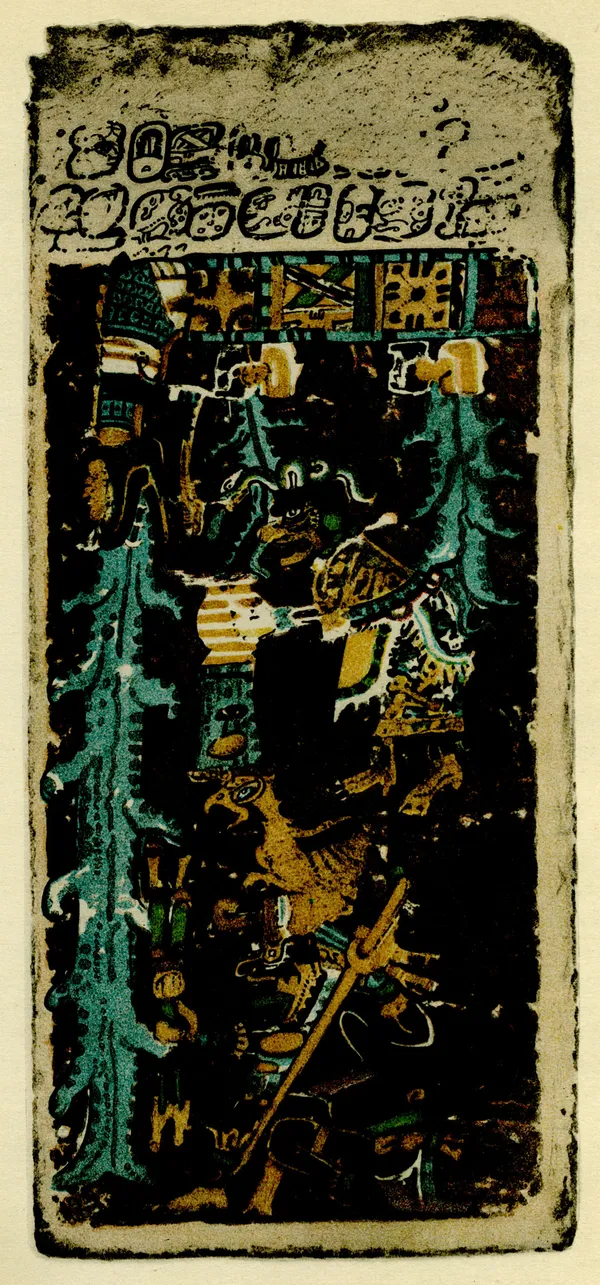
Image credit
"Page 74 of the Dresden Codex, showing the end of the world (according to Förstemann)" by S. G. Morley, An Introduction to the Study of the Maya Hieroglyphs (1915), plate 3 — https://commons.wikimedia.org/wiki/File:Maya_Hieroglyphs_Plate_03.jpg — Public domain (Plate 3 of Bureau of American Ethnology Bulletin 57, printed 1915 by the US Government Printing Office without a named plate maker: US, published before 1931; EU, anonymous work published 1915, term ended 1985 (Commons lists the author S. G. Morley, d. 1948, term also ended); a faithful copy of a page of an anonymous pre-Columbian manuscript (Directive (EU) 2019/790, Art. 14))
Maya Long Count: The 2012 Date Was a Rollover, Not an End
The Maya Long Count is a count of days. See the two inscriptions that name 13.0.0.0.0, a Palenque tablet counting on to 4772, and why the 2012 day is disputed.

Newest at the top, as in a section: the lowest layer was laid down first.