Category
Scripts
How writing systems work (alphabets, syllabaries, logographic and mixed systems), how they changed, how they were deciphered, and the scripts still undeciphered.
3 pages
-

Image credit
"Egyptian Obelisk at Kingston Lacy" by Adrian Farwell — https://commons.wikimedia.org/wiki/File:Egyptian_Obelisk_at_Kingston_Lacy_-_panoramio.jpg — CC BY 3.0 (https://creativecommons.org/licenses/by/3.0/)
Rosetta Stone: Its Broken Hieroglyphs Held Only One Royal Name
The Rosetta Stone's hieroglyphs survive in 14 broken lines with a single royal name. See how Champollion tested it against an obelisk from Philae in 1822.
-
Image credit
Illustration: Sherd and Script. Generated schematic illustration — not a photograph or record of any real object or site. Reuse: CC BY 4.0 (https://creativecommons.org/licenses/by/4.0/), to the extent Sherd and Script holds rights in it.
Linear B: How a Grid of Signs Led to Greek
Linear B's signs were sorted into a grid before anyone knew a sound. See how Kober's tables, Ventris's trial values and a Pylos tablet led to Greek.
-
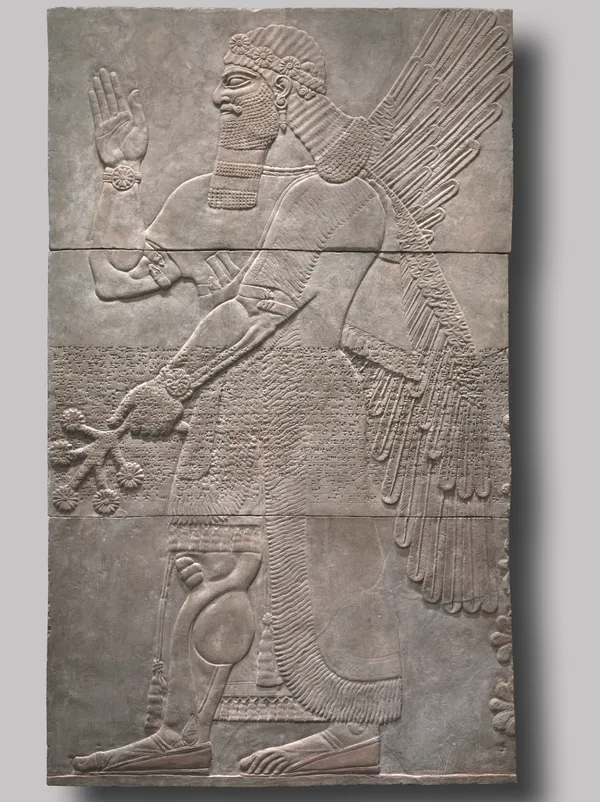
Image credit
"Saluting Protective Spirit" by The Cleveland Museum of Art — https://clevelandart.org/art/1943.246 — CC0 1.0 (https://creativecommons.org/publicdomain/zero/1.0/)
Cuneiform: The Sign That Starts Ea-nasir's Name Also Means "House"
Read Nanni's complaint to Ea-nasir sign by sign: one cuneiform sign is a syllable and the word for house, another is a syllable and a silent marker.

Newest at the top, as in a section: the lowest layer was laid down first.