Category
Evidence
How to read a section, how dates are established, the excavation history of well-known sites, what a single find can prove, and where pseudo-archaeology goes wrong.
3 pages
-
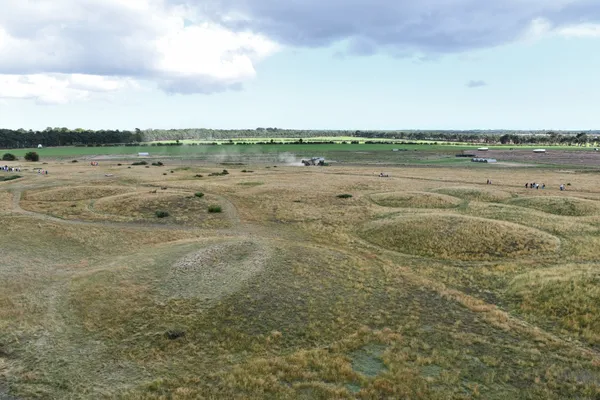
Image credit
"Sutton Hoo, The Royal Burial Ground: The Great Ship Burial Mound in the foreground" by Michael Garlick — https://commons.wikimedia.org/wiki/File:Sutton_Hoo,_The_Royal_Burial_Ground,_The_Great_Ship_Burial_Mound_in_the_foreground_-_geograph.org.uk_-_6945283.jpg — CC BY-SA 2.0 (https://creativecommons.org/licenses/by-sa/2.0/)
Sutton Hoo: What a Ship Made of Sand and Rivets Can Prove
The Sutton Hoo ship rotted away, but its iron rivets stayed put. See what they, the purse coins and the chamber prove, and why Rædwald's name stays a guess.
-
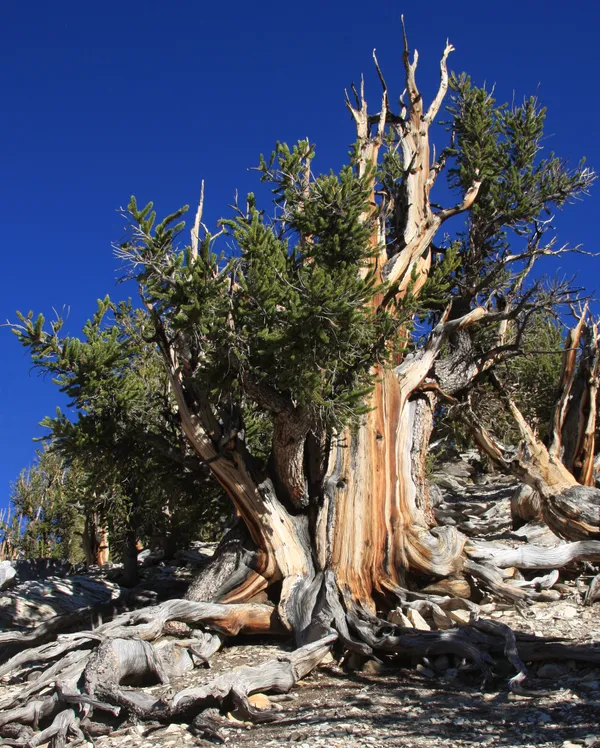
Image credit
"Big bristlecone pine Pinus longaeva" by Dcrjsr — https://commons.wikimedia.org/wiki/File:Big_bristlecone_pine_Pinus_longaeva.jpg — CC BY-SA 3.0 (https://creativecommons.org/licenses/by-sa/3.0/)
Carbon Dating: How One Lab Result Became a 114-Year Range
Carbon dating dates when a plant or animal stopped taking in carbon. See how one linen measurement, 3310 ± 25 BP, became 1624–1510 BCE (95.4%) on the IntCal20 curve.
-
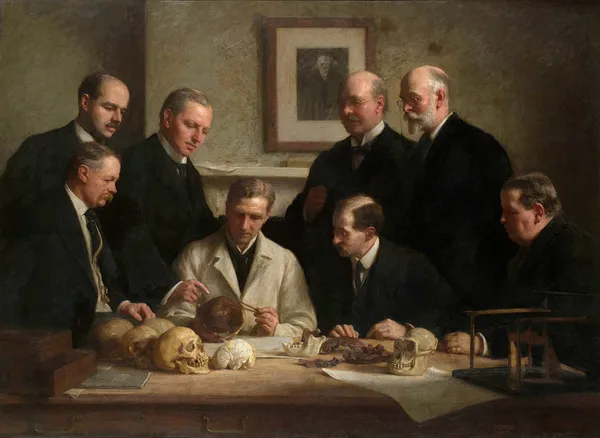
Image credit
"Group portrait of the Piltdown skull being examined (1915)" by John Cooke — https://commons.wikimedia.org/wiki/File:Piltdown_gang_(dark).jpg — Public domain (painter John Cooke died in 1932 (Wikidata Q21460852): public domain in the EU; painted in 1915: public domain in the US; a faithful photograph of a two-dimensional work adds no new rights)
Piltdown Man: Its Age Came From the Gravel, Not the Bones
Piltdown Man was dated by the fossils and flints beside it, not by its bones. See how fluorine and filed teeth exposed the fakes, and what a 2016 restudy added.


Newest at the top, as in a section: the lowest layer was laid down first.