Category
Ceramics
Form, body, glaze, decoration, marks and firing technique, explained through museum objects that always carry a museum number.
3 pages
-
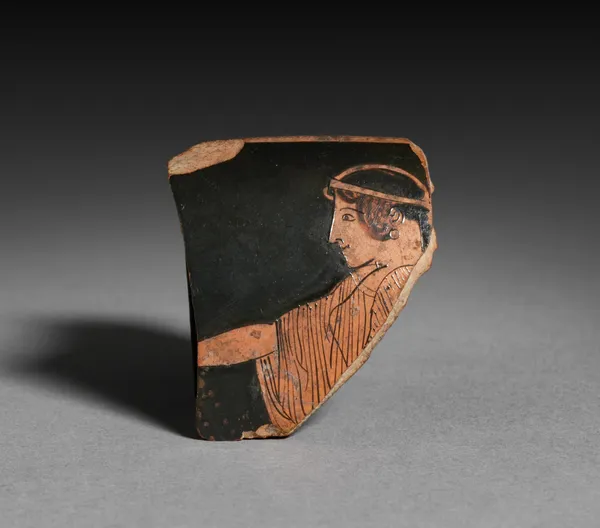
Image credit
"Fragment from Red-Figure Cup: Woman" by The Cleveland Museum of Art, Gift of the John Huntington Art and Polytechnic Trust — https://clevelandart.org/art/1915.533.b — CC0 1.0 (https://creativecommons.org/publicdomain/zero/1.0/)
Black-Figure vs Red-Figure: Reading the Technique from a Single Sherd
Black-figure paints the figures, red-figure the background. Two Cleveland fragments show incision, relief lines, a three-stage firing and a painted findspot.
-
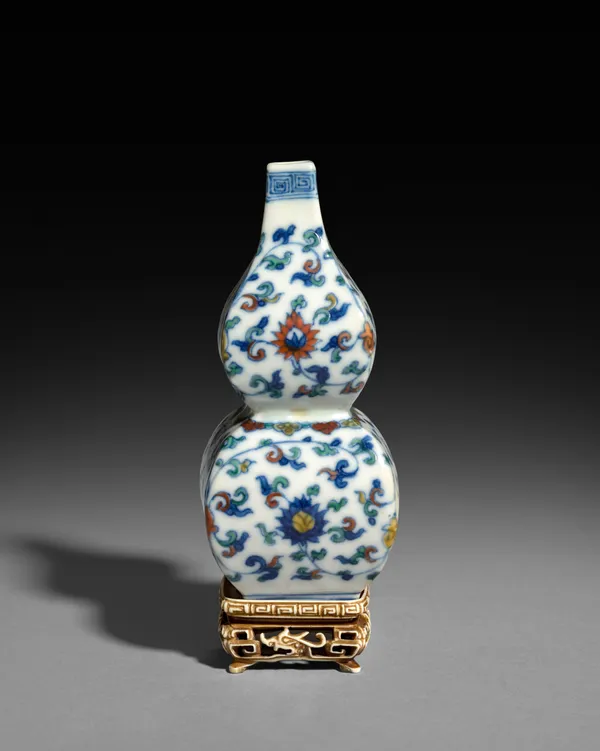
Image credit
"Square Double-Gourd Vase with Floral Scrolls" by The Cleveland Museum of Art, Severance and Greta Millikin Collection — https://clevelandart.org/art/1964.172 — CC0 1.0 (https://creativecommons.org/publicdomain/zero/1.0/)
Ming Vase: One Reign Mark, Two Museum Dates
A Ming vase in Cleveland bears a Jiajing reign mark and a museum date in that reign. A bowl with the same six characters is dated to the Qing instead.
-
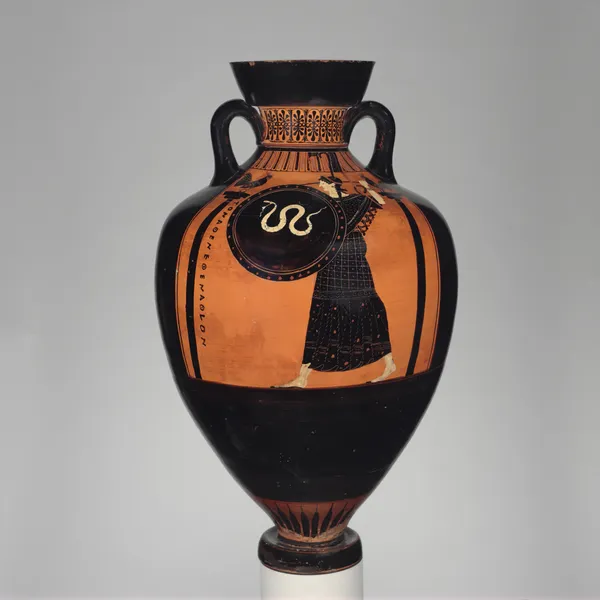
Image credit
"Terracotta Panathenaic prize amphora (jar) MET DP104351" by The Metropolitan Museum of Art, New York (Open Access) — https://commons.wikimedia.org/wiki/File:Terracotta_Panathenaic_prize_amphora_(jar)_MET_DP104351.jpg — CC0 1.0 (https://creativecommons.org/publicdomain/zero/1.0/)
Panathenaic Amphora: The Archon's Name Dates the Oil, Not the Victory
A Panathenaic prize jar in London names the archon Pythodelos. An archon list fixes his year, 336/5 BCE, but that year dates the oil, not the race.

Newest at the top, as in a section: the lowest layer was laid down first.