Sherd and Script

Every date has a method.Every object has a findspot.

A site for reading ancient evidence, for general readers who want to know how we know: every date states its basis, every object comes with its excavation context, and every conversion is computed.

On the bench

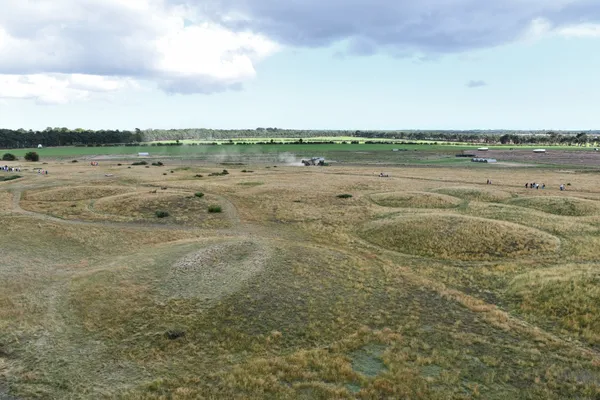
Burial mounds at Sutton Hoo seen from above in dry grass, Mound 1 in the foreground, fields and trees behind.
"Sutton Hoo, The Royal Burial Ground: The Great Ship Burial Mound in the foreground" by Michael Garlick — https://commons.wikimedia.org/wiki/File:Sutton_Hoo,_The_Royal_Burial_Ground,_The_Great_Ship_Burial_Mound_in_the_foreground_-_geograph.org.uk_-_6945283.jpg — CC BY-SA 2.0 (https://creativecommons.org/licenses/by-sa/2.0/)

Evidence · Case file

Sutton Hoo: What a Ship Made of Sand and Rivets Can Prove

The Sutton Hoo ship rotted away, but its iron rivets stayed put. See what they, the purse coins and the chamber prove, and why Rædwald's name stays a guess.

c. 610–635 CE · associated finds, coins

Object / Site
Sutton Hoo Mound 1 ship burial: the impression and iron rivets of a clinker-built ship about 27 m long, with a burial chamber amidships
Findspot
Sutton Hoo, Suffolk, England, across the River Deben from Woodbridge; Mound 1 of the burial ground; site-level only
Context
Unrobbed burial: ship set in a trench below the seventh-century ground surface, chamber amidships, mound about 36 m across; a 16th-century robber pit missed the chamber
Dated by
Associated finds: 37 Frankish gold coins, 3 blanks and 2 small ingots found with the purse. Two radiocarbon results from the early 1970s (lamp beeswax, chamber wood) are treated with caution

Read the full case file: Sutton Hoo: What a Ship Made of Sand and Rivets Can Prove
Recently logged

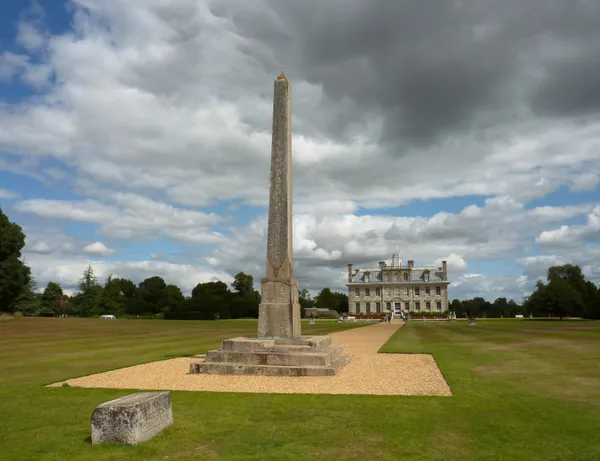
  1. Philae obelisk on a stepped base in the park at Kingston Lacy, Dorset, with the country house behind it.
    Image credit

    "Egyptian Obelisk at Kingston Lacy" by Adrian Farwell — https://commons.wikimedia.org/wiki/File:Egyptian_Obelisk_at_Kingston_Lacy_-_panoramio.jpg — CC BY 3.0 (https://creativecommons.org/licenses/by/3.0/)

    196 BCE · computed, proleptic Julian

    Rosetta Stone: Its Broken Hieroglyphs Held Only One Royal Name

    The Rosetta Stone's hieroglyphs survive in 14 broken lines with a single royal name. See how Champollion tested it against an obelisk from Philae in 1822.

    Scripts · Case file · 13 October 2026

  2. Burial mounds at Sutton Hoo seen from above in dry grass, Mound 1 in the foreground, fields and trees behind.
    Image credit

    "Sutton Hoo, The Royal Burial Ground: The Great Ship Burial Mound in the foreground" by Michael Garlick — https://commons.wikimedia.org/wiki/File:Sutton_Hoo,_The_Royal_Burial_Ground,_The_Great_Ship_Burial_Mound_in_the_foreground_-_geograph.org.uk_-_6945283.jpg — CC BY-SA 2.0 (https://creativecommons.org/licenses/by-sa/2.0/)

    c. 610–635 CE · associated finds, coins

    Sutton Hoo: What a Ship Made of Sand and Rivets Can Prove
    The Sutton Hoo ship rotted away, but its iron rivets stayed put. See what they, the purse coins and the chamber prove, and why Rædwald's name stays a guess.

    Evidence · Case file · 13 October 2026

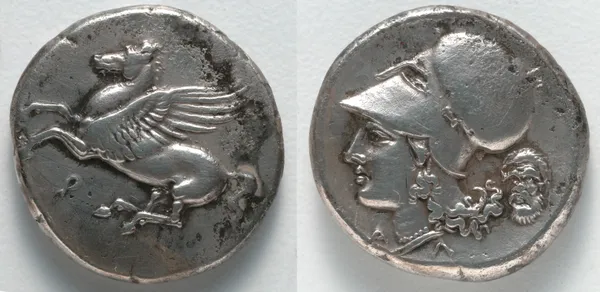
  3. Silver coin, both sides: a winged horse on one, a helmeted head on the other; minted at Corinth.
    Image credit

    "Stater: Pegasos (obverse); Head of Athena (reverse)" by The Cleveland Museum of Art — https://clevelandart.org/art/1916.984 — CC0 1.0 (https://creativecommons.org/publicdomain/zero/1.0/)

    60 ± 10 BCE · associated finds, coins and pottery

    Antikythera Mechanism: Neither of Its Two Dates Is When It Was Made

    The Antikythera mechanism sank around 60 BCE, and its dials count from a start computed for 205 or 178 BCE. Neither date says when the device was made.

    Calendars · Case file · 13 October 2026

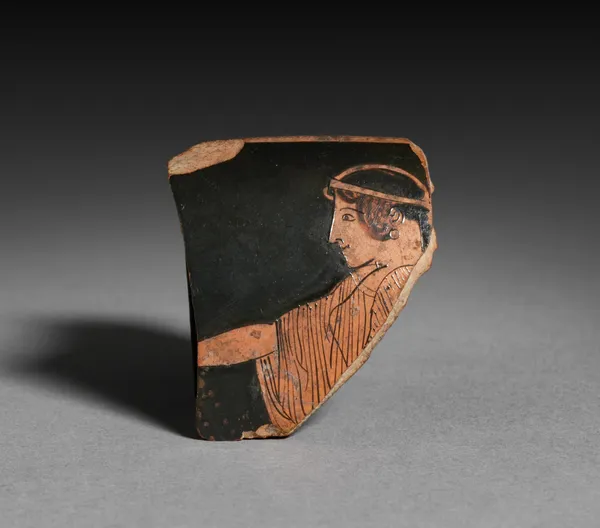
  4. Red-figure cup fragment: a woman's head and shoulder in bare orange clay on black gloss, outlined in fine raised lines.
    Image credit

    "Fragment from Red-Figure Cup: Woman" by The Cleveland Museum of Art, Gift of the John Huntington Art and Polytechnic Trust — https://clevelandart.org/art/1915.533.b — CC0 1.0 (https://creativecommons.org/publicdomain/zero/1.0/)

    c. 470–460 BCE · museum attribution

    Black-Figure vs Red-Figure: Reading the Technique from a Single Sherd

    Black-figure paints the figures, red-figure the background. Two Cleveland fragments show incision, relief lines, a three-stage firing and a painted findspot.

    Ceramics · Side by side · 13 October 2026

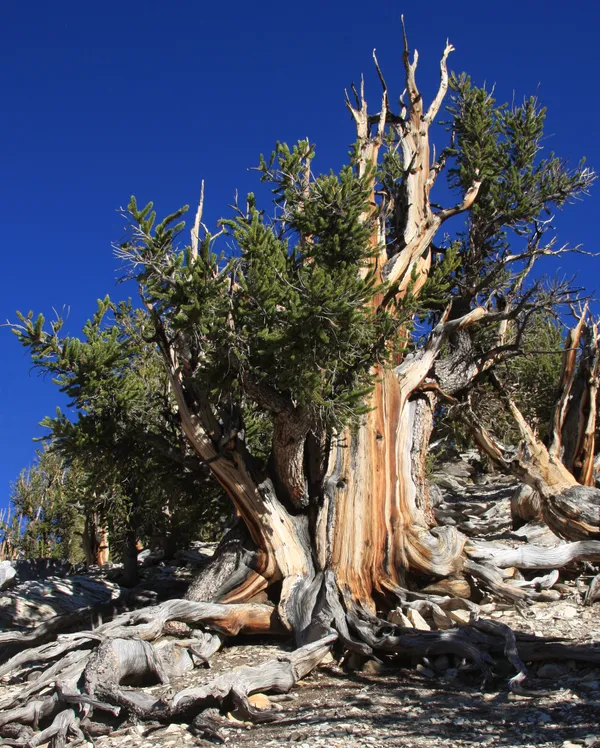
  5. Photo: an old bristlecone pine with a twisted, partly dead trunk of streaked bare wood under a deep blue sky.
    Image credit

    "Big bristlecone pine Pinus longaeva" by Dcrjsr — https://commons.wikimedia.org/wiki/File:Big_bristlecone_pine_Pinus_longaeva.jpg — CC BY-SA 3.0 (https://creativecommons.org/licenses/by-sa/3.0/)

    1624–1510 BCE · radiocarbon, cal. 2σ

    Carbon Dating: How One Lab Result Became a 114-Year Range

    Carbon dating dates when a plant or animal stopped taking in carbon. See how one linen measurement, 3310 ± 25 BP, became 1624–1510 BCE (95.4%) on the IntCal20 curve.

    Evidence · How we know · 13 October 2026

  6. Illustration: three trays of blank slips beside twelve blank slips laid out in three rows and four columns.
    Image credit

    Illustration: Sherd and Script. Generated schematic illustration — not a photograph or record of any real object or site. Reuse: CC BY 4.0 (https://creativecommons.org/licenses/by/4.0/), to the extent Sherd and Script holds rights in it.

    1952 · documentary

    Linear B: How a Grid of Signs Led to Greek

    Linear B's signs were sorted into a grid before anyone knew a sound. See how Kober's tables, Ventris's trial values and a Pylos tablet led to Greek.

    Scripts · How we know · 13 October 2026

By category newest on top

Evidence

How to read a section, how dates are established, the excavation history of well-known sites, what a single find can prove, and where pseudo-archaeology goes wrong.

  1. Sutton Hoo: What a Ship Made of Sand and Rivets Can Prove
  2. Carbon Dating: How One Lab Result Became a 114-Year Range
  3. Piltdown Man: Its Age Came From the Gravel, Not the Bones

All 3 in Evidence

Scripts

How writing systems work (alphabets, syllabaries, logographic and mixed systems), how they changed, how they were deciphered, and the scripts still undeciphered.

  1. Rosetta Stone: Its Broken Hieroglyphs Held Only One Royal Name
  2. Linear B: How a Grid of Signs Led to Greek
  3. Cuneiform: The Sign That Starts Ea-nasir's Name Also Means "House"

All 3 in Scripts

Calendars

How calendars work (lunar, solar, lunisolar, Long Count), intercalation, eras, historical calendar reforms, and ancient timekeeping instruments.

  1. Antikythera Mechanism: Neither of Its Two Dates Is When It Was Made
  2. Egyptian Civil Calendar: Midwinter to Midsummer in 730 Years
  3. Maya Long Count: The 2012 Date Was a Rollover, Not an End

All 3 in Calendars

Ceramics

Form, body, glaze, decoration, marks and firing technique, explained through museum objects that always carry a museum number.

  1. Black-Figure vs Red-Figure: Reading the Technique from a Single Sherd
  2. Ming Vase: One Reign Mark, Two Museum Dates
  3. Panathenaic Amphora: The Archon's Name Dates the Oil, Not the Victory

All 3 in Ceramics

Random sherd

One page drawn at random from everything logged so far.

Draw a sherd